JIMIN CHOI
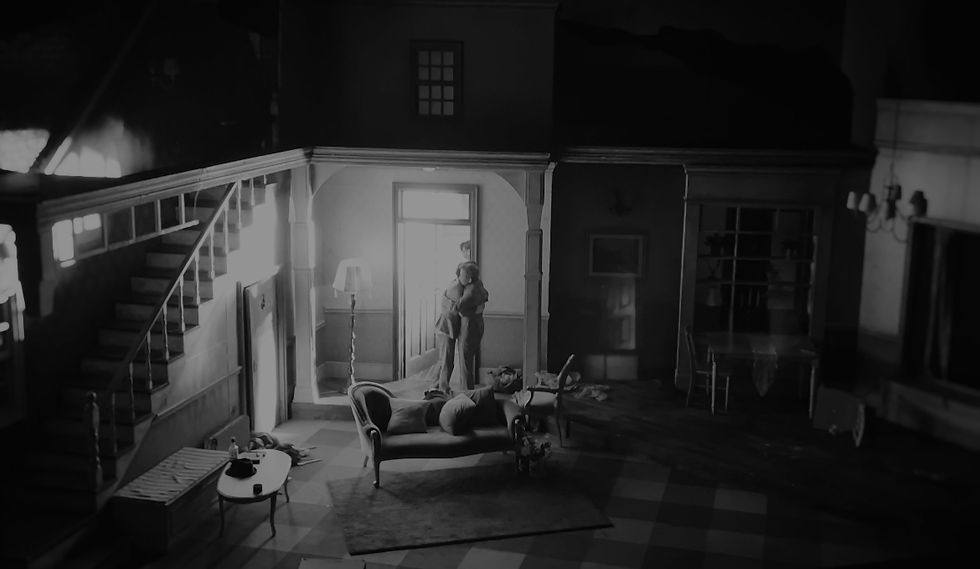
© Jimin Choi (2023)
When the broken try to shield the unbroken
ORPHANS, the play
The best of shows leave us changed people. As we walk out of the theatre of these shows, we leave, through the power of story, with a fundamental change in the way we think (however big or small). Of course, there are shows that are purely great entertainment -- that give us two hours or so of great enjoyment. But for a show to stand the test of time, I believe it needs to have resonance.
Yesterday I had the pleasure of seeing such a show, at a small venue in the theatre capital of Korea. Even with just three actors (and thus three characters), the stage did not feel small; their story and message was far, far, greater than comprehendible.
TWO ORPHANS AND A GANSTER, A WEIRD COLLAGE OF A FAMILY
Orphans tells the story of two brothers, orphaned by the death of their mother and desertion of their father. Treat, the eldest, makes a living for the two of them by stealing. Unlike his delinquent brother, Phillip spends his days at home, watching passersby out of his window and (against the violent scrutiny of his brother) reading newspapers and books. Their circumstances soon change, however, when Treat connives an awkward and haphazardous plan: to kidnap a wealthy looking man and hold him hostage for a desirable sum.
Treat soon sets his sights on Harold, but to his dismay, Harold is not your regular business man. With tricks up his sleeve and a lifetime of experience, Harold wittily manipulates the two boys to get himself out of harm’s way. The three soon form a distorted portrait of a family -- unconventional in every way, but still, somehow, reminiscent of a family.
The show takes place against the backdrop of the boys’ (and eventually, Harold’s) home. In the first act, the home is dishevelled, with torn furniture, peeling wallpaper, scattered beer cans, and Hellmann’s mayonnaise (the boys’ main form of nutrition alongside canned tuna). The home looks decrepit even at first glance, but the heartbreaking thing about it is just how homey it feels. Despite the absence of a parental figure, Treat has taken on the role of a father (and mother) to Phillip, creating a home for them as best as he can. During the intermission, we see the home go through a transformation (at the skilful and quick hands of the production crew), as Harold and his dirty money helps improve not only the boys’ living conditions, but also their appearance.
Of the three characters, TREAT is the one who seems to resonate the most. Unlike his endearing brother, he has experienced the outside world and seen just how cruel it can be to a child labeled an orphan. Tattered from his past trauma, he is visibly abusive and often violent towards his younger brother. But in his own disturbed way, he’s created a microcosm for the two of them that shields them from the outside world. In a weird way, the abuse and violence he shows his brother provides comfort and stability -- this is the only place in the world where Treat can feel in control.
The true gut-punch moment (there are several of these in the last 20 minutes or so of the show), is when Treat reacts to Harold’s death. After clenching his mother’s coat (the very one that he had thrown to the floor in disgust over Phillip’s naïveté), he crawls over to Harold’s dead body and places the corpse’s ever-growing-colder hand on his head. His plea? For kindness and encouragement. It’s a tragic ‘breaking down of walls’, as Treat finally lets out a cry for help towards a man that he had been so determined not to let in.
THE GEOGRAPHY OF BELONGING
Ultimately, the show is about neglect. It’s a show that makes us check our own privileges and asks, ‘so what the hell are you going to do about it?’. It reminds us of the need for compassion: why we need to be kind, why we must be adults for those children who are forgotten.
Somewhere along the way, Harold gifts Phillip with a map of the city, telling him the road, city, state, country, continent, and planet they live on. When Phillip and Treat’s conflict is at its height, Phillip screams the following out of the window, in defiance of his brother who is resistant to the changes that Harold has brought on their family:
I’M AT SIXTY-FORTY NORTH CAMAC STREET, IN PHILADELPHIA, TREAT! I’M ON THE EASTERN EDGE OF THE STATE OF PENNSYLVANIA IN THE UNITED STATES OF AMERICA! I’M ON THE NORTHERN AMERICAN CONTINENT ON THE PLANET EARTH, IN THE MILKY WAY GALAXY, SWIMMING IN A GREAT OCEAN OF SPACE! I’M SAFE AND SOUND AT THE VERY EDGE OF THE MILKY WAY! THAT’S WHERE I AM, TREAT! And you’re it, Treat.
As someone who, by sheer luck, has never had to deal with the stigma and hardships of being an orphan, Phillip’s screams were truly heart-breaking. It was his scream to the world, on behalf of the entire nation of orphans: forgotten, scattered, yet very much existing, all over the world.